(photo Credit: rbtvanhorn) On Monday, FEB 23, 2009 Assemblyman Tom Ammiano introduced "The Marijuana Control, regulation and education act (AB 390)" as a simple matter of fiscal common sense. If you believe Ammiano and his straitlaced panel, it is. In a nutshell, here's what the bill would do: "Remove all penalties under California law for the cultivation, transportation, sale, purchase, possession, and use of marijuana, natural THC and paraphernalia by persons over the age of 21," according to the SF Weekly.
The bill is supposed to generate an estimated 1.3 billion dollars for the state of California. My initial response to this was excitement. This bill has been a a long time coming. As Peter Tosh has been preaching for years, "Legalize it."
Not only would legalizing it help rectify the state's budget problem and perhaps keep tuition down at state education facilities, it could also alleviate some of the public education cuts being implemented. I will be interested to discover what the Governator's stand on AB390 is.
My initial excitement quickly turned to pessimism. I remembered the large conservative population in southern California that will probably do all they can to fight this bill. Maybe the Mormon church will raise another $15 million to fight it like they did with Prop. 8.
To my surprise one of the bills most public supporters is retired Judge, James Gray. Notoriously conservative, according to the SF Weekly article, Judge Gray said, "I served 25 years on the bench and I've seen the results of this attempted prohibition. It doesn't make marijuana less available, but it does clog the court system."
The harsher we enforce marijuana laws, the less time there is to spend enforcing other more serious crimes. "We [only have] so many resources. And we at this moment," said Judge Gray, "have thousands of people in state prisons right this minute who did nothing but smoke marijuana."
Not only would this bill generate money for California, but it would also lower the amount of taxpayer money that is spent trying Marijuana related cases in court and housing Marijuana convicts in state and local correctional facilities.
I am in full support of this bill. The idea that a plant which grows naturally is considered a drug and is illegal is preposterous. Alcohol is a far more dangerous drug. Alcohol is man-made and leads to far worse societal problems compared to cannabis.
Now i know what the argument is for people out there. If we make it legal, then everyone will do it and our society will fail.
The second argument is, What's next? Once we legalize Pot, then next it will be cocaine, heroin and LSD.
REALLY?
C'mon now people. One, being stoned and lazy is better than getting behind the wheel when you are seeing double and leaving the bar at 2 am. Two, just because its legal doesn't mean everyone is going to do it. Hell not everyone drinks alcohol and smokes cigarettes, of course they are both legal.
I will leave you with one quote from Conservative Judge Gray, "You and I as adults can go home tonight and drink 10 martinis. It's not a healthy thing to do, but it's not illegal. Someone who smokes marijuana and goes to bed risks jail."
"I don't smoke marijuana and if you legalized it today and gave it away at every street corner I'm still not going to," said Judge Gray. "But the most harmful thing about marijuana today is prison - and also the most expensive. I take President Obama at his word - he said let's look at what's working and what is not, and jettison those programs that are not working."
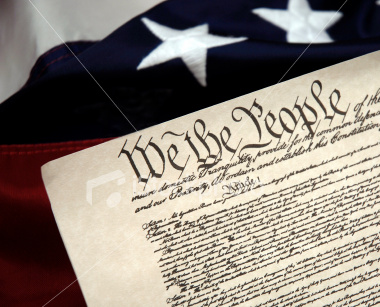
The United States had defeated the British and sent the aristocratic monarchy back to Europe. Since Jefferson’s Declaration of Independence the country had been run according to the Articles of Confederation (AOC), the 13 colonies’ constitution if you will. Being the first attempt at formulating a national government, there were obviously certain flaws. In the 1780’s the ideals of 1776 were seriously threatened not by the government, but by the people. The founders’ articles, in an attempt to make sure the tyranny of Britain never showed up in America, made the central government far too weak, and delegated far too much power to the state governments.
During the Revolutionary War, most states had been solidifying their governmental practices with written constitutions. These constitutions demonstrated the ideas of the era: term limits, equal suffrage among men, and a bill of rights. The states wanted to make sure the people’s liberties were protected under the newly formed governments. With this degree of self preservation in mind, the states could not anticipate a new kind of tyranny caused by too much power in the hands of the people.
Under the AOC, the central government was so weak in comparison to the state-run governments, it could not impose taxes or regulate commerce between colonies, had no executive branch or national court system, and could only amend the Articles of Confederation with unanimous consent of all the states.
The straw that broke the camel’s back came in 1786, when Daniel Shays led an armed rebellion of nearly 2000 farmers in Massachusetts and closed the courts in three counties preventing creditors from collection debts. This violent action sealed the deal for the founders and in 1787, after delegates from five states met in Annapolis, MD, the Constitutional Convention was held in Philadelphia to revise and amend the AOC. However, all at the convention decided a new Constitution was needed.
In the United States Constitution, the founders needed to develop a strong central government that could unify the colonies into united states. Drawing from the experience of the state governments and constitutions, those attending the closed-door convention were able to hypothesize what kind of governmental structure would work best. What they came up with was a three branch system consisting of legislative, executive, and judicial branches.
The most powerful branch, the legislative, dealt with representation of the people. As a compromise of the Virginia and New Jersey plans, Article One of the U.S. Constitution allowed for a bi-cameral Congress. In the House of Representative, representation is based on population. In the Senate, however, each state is given 2 votes. This way the large states felt they were represented fairly in the house, and the smaller states still believed their interests could be represented in the senate. Article Two asserts, “The executive power shall be vested in a President of the United States of America.” The job of the President it to execute the laws of congress, lead the government, interface with foreign leaders, and is the Commander in Chief of the U.S. Military. And last but not least, Article Three states, “The judicial Power of the United States, shall be vested in one supreme court and in such inferior Courts as the Congress may from time to time ordain and establish” Their main function is that of judicial review where they review the state and federal laws if they are challenged and deem them constitutional or not.
The new government was set up with three branches to keep the powers separate. This separation of powers was to be maintained with a system of checks and balances where each branch has a role in the actions of the other. With this system, however, some people still felt that the new constitution gave too much power to the central government, and thought the AOC were fine as they were. These people became known as Antifederalists. Although Antifederalists conceded that some reforms in the AOC were needed, they denied that there was a crisis that necessitated a new constitution. They saw this new government as a threat to liberty. The Antifederalists, not an organized group, but a diverse assortment of individuals who opposed ratification, felt that a government so far removed from the people could not accurately represent them.For this reason they thought the only way to have liberty, was for people to feel connected to their government—hence strong local and state governments.
On the other side of the coin, the Federalists, those in favor of ratification of the new constitution, conversely felt that with an increasingly heterogeneous culture, the only way to protect liberty was with the expansion of a single republican government to cover a large area with a diverse population. The Federalist, 85 essays published in New York newspapers to convince New York to ratify the constitution, exhibited the views of federalists James Madison, John Jay, Alexander Hamilton, and George Clinton.
James Madison, in his Federalist paper #10, spoke out on the issue of factions, the principle cause for trouble in a democratic society. Madison said the only way to get rid of factions was to either destroy liberty or force citizens to all have the same ideals and interests. According to Madison, a faction is, a number of citizens, whether amounting to a majority or minority of the whole, who are united by some common impulse of passion adverse to the rights of other citizens or interests of the community. He is saying that a faction is any group of people who have similar ideals, goals, and interests who band together to achieve those goals.
These factions, with their desire to achieve theirs goals, are proven harmful to government and liberty when they taint public administrations. The U.S. was becoming more heterogeneous. There is no way to force all people to share interests, and Madison in no way believes destroying liberty would be wise. Therefore the solution he offers in regards to factions is to control the effects of factions. The way to control factions, according to Madison, is under the constitution, “I may clog the administration, it may convulse the society; but it will be unable to execute and mask its violence under the forms of the Constitution.”
Antifederalists felt the country needed to stay small and homogeneous in demographic. They sought to protect the values the country against what they perceived as an attack by the Federalists. The only way for equality and liberty to live, they thought, was for people to participate directly in government. The Constitution was a shift away from civic humanism. The Lockean ideals adhered to were the spark for the revolution, but the community effort of the colonies, civic humanism, is what kept the fire burning. Once the British were gone, people wanted their personal rights—their individual freedoms. Therefore, in a large republican government people did not share either concerns or customs…the public good would be lost in all the conflicting interests.
Antifederalists and Federalists could be considered polar opposites. When analyzing which view is better, however, one must realize that weather liberty is more stable in a small government close to the people or in a large, powerful, distant government depends on the society being governed. For instance, the position of the Antifederalists, who felt liberty would only be secure if government were kept small, close to the people, and under their control. In their culture, a direct democracy form of government would work because most everyone would be striving for the public good. The closest actual example in America was seen post Revolutionary War, under the AOC, where the states were not looking out for the good of the nation but only the individuals within their borders, creating less stability as a whole. Therefore the republican government established in the U.S. Constitution allowed for more stable United States governed by a more powerful central government able to withstand the tests of time.
Jefferson and Hamilton present two extremes, where one “dreamt” property ownership could create a feeling of community and values. The other “dreamt” capitalism should prevail appealing to the individual, analogous with Lockean ideals. Then there was Madison, who had no dream. That is what the U.S. Constitution brought to the United States, a middle ground between public good and individual values, where natural rights are upheld.
The metallic, overhead projector looking droid known as Johnny-5 bulldozed his way through the overcrowded streets of Sacramento on his way to the state capitol. His Daunting task, assigned by the enraged California Teachers Association (CTA), was to infiltrate the Capitol Building, holding every pretentious California legislator hostage until they agreed on a budget plan for 2009. Johnny-5 was to use any force necessary to achieve his objective: to ensure a budget was signed into legislation within 48 hours of his outrageously violent takeover, including the use of the cruel and torturous method known as water boarding.
Arriving at the gold domed capitol building to a barrage of television news reporters, the determined android located his bullshit seeking missiles and pointed them in the direction of the mostly white news vans with telescopic satellites protruding from their flat roofs. After broadcasting a preemptive strike warning to all of the reporters' PDAs, Johnny-5 proceeded to arm the missiles. Like the swish of a basketball through a net, the 2 foot long slender missiles left Johnny-5's metal, square, army-green shoulder holster that brandished bright yellow, stenciled writing that read, "Explosives!"
As the missiles soared low to the ground, the reporters were discussing the message they all received on their coveted PDAs. "Is this some kind of joke?" a CNN reporter asked.
"I bet it's Al Qaeda. They've teamed up with Ralph Nader and are conquering the US one state at a time, starting with California," feared a Fox News reporter.
As heat seeking missiles track heat signatures, the Bullshit seeking missiles began to detect more and more Bullshit from the reporters in their path. The more bullshit that is discovered, the faster and more accurately the weapons travel. Johnny-5's megaphone/bullhorn, now being controlled temporarily by the CTA, was activated. Another message was relayed to the ornery reporters, "Report objectively and truthfully without bias or you will be killed!"
Standing around with their pencils up their asses, the group of journalists, as they like to be called, stood scratching their heads. As they simultaneously turned around to see four sets of Bullshit seeking missiles headed for them at an alarming speed, they aslo noticed the red eyed, 5 foot tall android operating on tractor-like tracks not far behind...(more to come next time)
BULLSHIT! Yes that is right. I call Bullshit on CSUMB. I am done with the requirements that no other school enforces on their students. I have heard so many stories of students who were mislead in their academic plans. Then at the last minute it is discovered that they are missing one class and must stay for another six months in order to fulfil "culture and equity" or some other shit. What the fuck is that anyway? Culture and equity. I'm sure there are some people at this school that know more about culture and the lack of equity in the country than any of those classes will ever teach them. This brings me to Multi-culturalism. How the fuck are we going to incorporate multiculturalism into every fucking goddamn class there is on campus? Hell make it a goddamn major for christsake. We can call multicultural studies. It can even be part of HCOM. The concentrations for the major can be one from Chicano studies, one from African-American studies and the third, hmm, well there doesn't seem to be another type of culture concentrated on in the HCom Major. Isn't that strange? Well i guess we will just throw Women's studies into that new concentration then. I mean multiculturalism is good right? it doesn't form any kind of stereotypes or anything right? I mean a class called "Relating to Whiteness" is productive right? Think about that. This class is saying that all white people have it easy. well i can see the perspective thatthis concept comes from because in the bigoted society we live in it is probably true. The problem i have with this class, however, is that it isn't breaking down any stereotypes or enlightening white people to start treating other races and cultures differently. All it does is reinforce societal stereotypes and teach people to point fingers and say, "See its all your fault, I'm the victim."
While i am grateful for the opportunity to earn my undergraduate degree from this institution, i would much rather be some other place because of all the hypocritical and benign bullshit......